

Roll a face
for every user
DiceBear turns a name into an avatar, and the same name gives the same avatar every time. 63 styles, an HTTP API and libraries for seven languages.
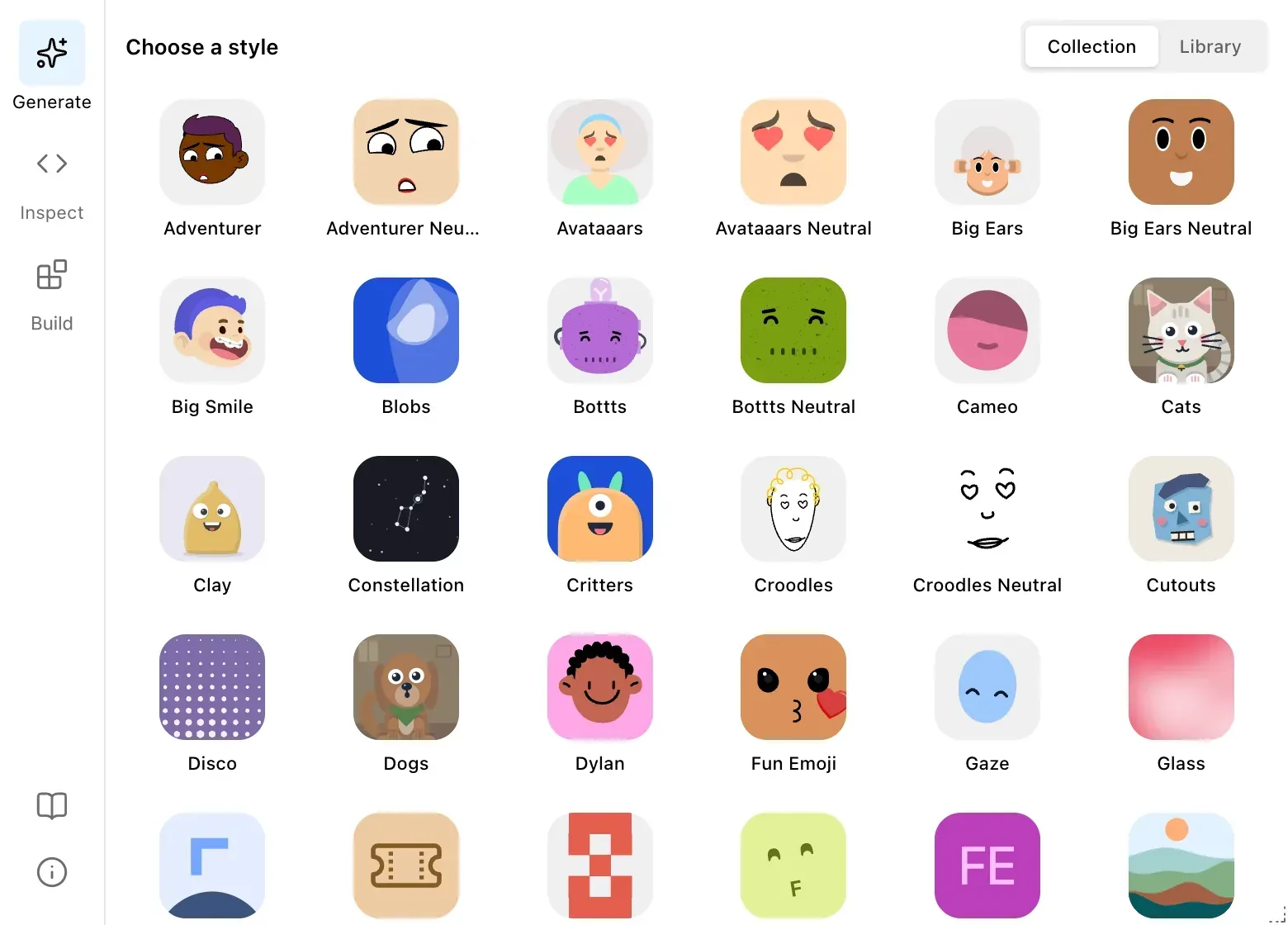
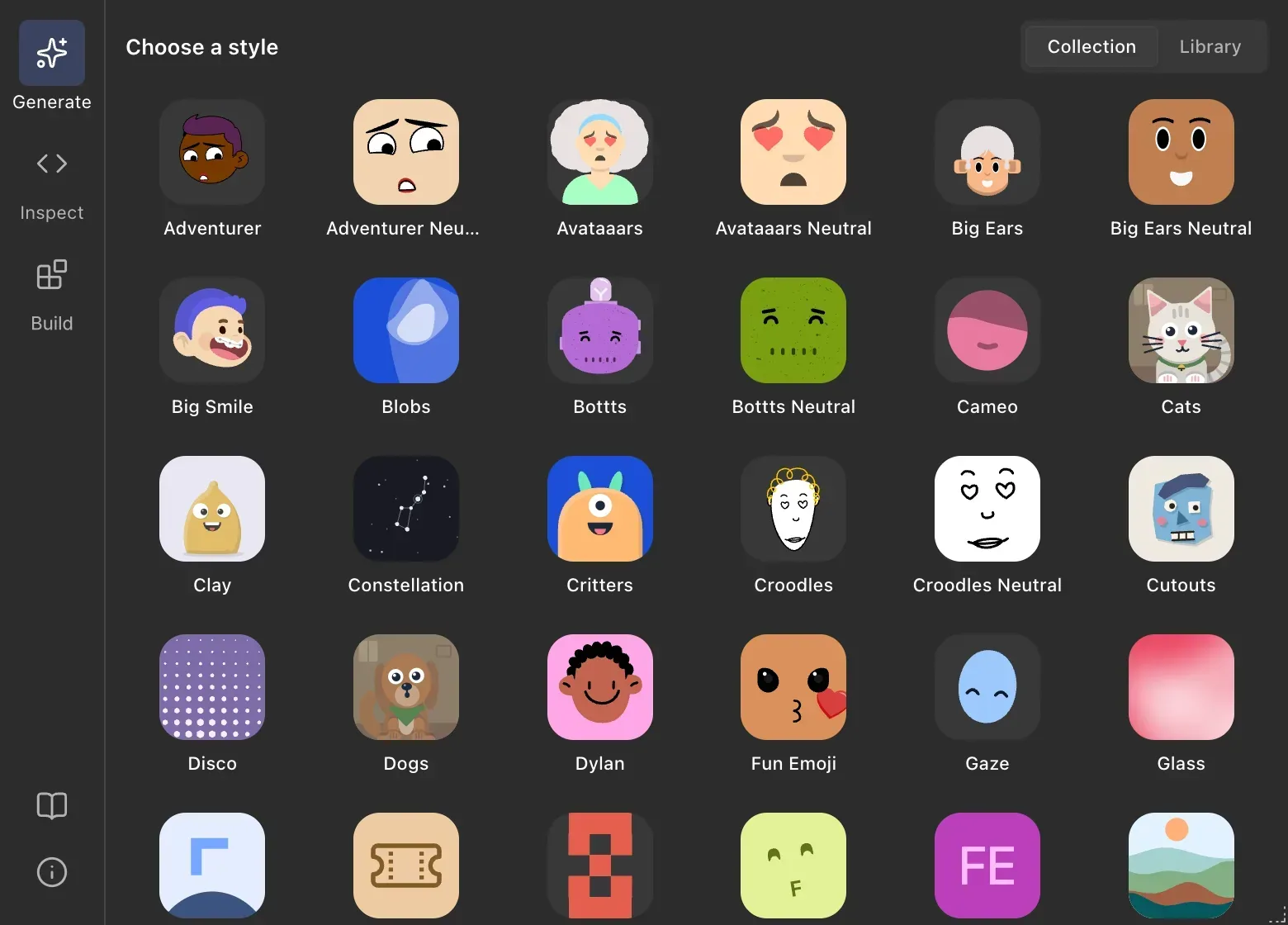
63 styles in the box
People, animals, robots, scenes and abstract marks, by independent artists and by us. Switching is one word in your code, and 21 of them can move.
An avatar behind every URL
The hosted API answers every URL with an image and is free for non-commercial use. bunny.net sponsors the CDN behind it.
Requests per month
One line, and everybody has a face
Put the URL into an image tag. Or draw avatars in your own code, with a library for seven languages and a CLI for batches. Each of them returns the same avatar for the same seed.
<img
  src="https://api.dicebear.com/11.x/pixel-art/svg?seed=Felix"
  alt="Avatar"
/>A style of your own
Draw it in Figma or write it by hand. Either way you end up with one file that works in the libraries, the CLI and the Playground.
Draw it in Figma
One component per variant, color styles for the palettes. The plugin exports the frame as a style and puts real avatars into your mockups.
Write it by hand
A style is a JSON file with a canvas, components, colors and animations, and no code in it. The schema is open.
Use it everywhere
One file, read everywhere. The Playground and the libraries load a style of your own from its definition.
Open source since 2017
The first commit dates from March 2017. Version 11 is the current one, and it is still built in the open.
MIT code, CC0 styles
The code is MIT licensed and on GitHub. 44 of 63 styles are CC0, free to use without attribution, and every other style keeps the license its artist chose.
No paid tier
There is no company behind DiceBear. bunny.net sponsors the CDN, so the hosted API costs nothing for non-commercial use.
Your data stays yours
The libraries run in your own code, so nothing about your users leaves your systems.